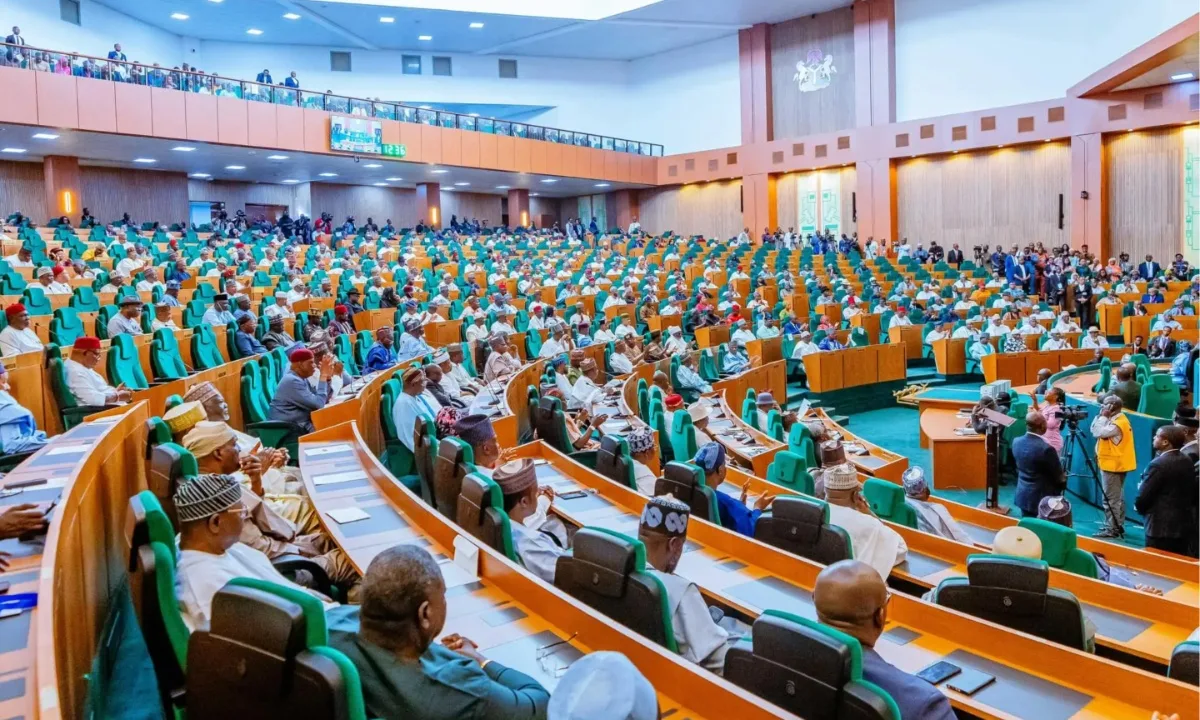
Abuja tenants who have been told to bring two or three years' rent before collecting keys may soon have the law on their side. The House of Representatives has advanced a bill that would make it illegal for landlords, estate agents and property managers in the Federal Capital Territory to insist on rent covering more than one year at a time.
The proposal scaled second reading after lawmakers argued over how best to shield renters from punishing charges. It is sponsored by Paul Nnamchi, a lawmaker from Enugu State, and co-sponsored by Ahmed Yusuf Doro from Katsina State. It is not yet law: it still has to pass further legislative stages, including a public hearing.
Reports differ slightly on what the bill is called. Naija News gave its full title as "A Bill for an Act to Regulate Advance Rental Payments, Prohibit Compulsory Multiple-Year Rent Demands, Establish the Federal Capital Territory Rent Regulation and Tenants' Protection Authority, Provide Remedies for Unlawful Rental Practices, and for Related Matters." Daily Post and Tori News referred to it as the "Federal Capital Territory Advance Rent Regulation and Tenants' Protection Bill, 2026."
What the bill proposes
The heart of the bill is Section 4. According to Naija News, it bars landlords, agents and property managers from asking for, collecting or pressuring anyone into paying beyond a year's rent upfront, whether to secure a new place or to renew an existing tenancy. There is one exception: a tenant may choose to pay for a longer period, as long as the landlord did not force it and both sides put the deal in writing.
Daily Post and Tori News reported that the rule would cover homes as well as commercial property in the territory. Lawmakers said some landlords and agents dodge the one-year norm by stacking up compulsory service charges, agreement fees and fake renewals to pocket more than twelve months' money. The bill would outlaw those tricks.
Agency and agreement fees, which tenants say can sometimes climb as high as 25 percent of the rent, would also come under regulation. The bill proposes a digital register of every housing agent operating in Abuja, which Nnamchi described during the debate as a unified platform for identifying agents, alongside reasonable limits on what they can charge.
Enforcement would sit with a new agency, the FCT Rent Regulation and Tenants' Protection Authority. It would receive complaints, investigate them, mediate disputes and order landlords to return any unlawful payments within 30 days. Individual landlords or agents who break the rules could be fined between N500,000 and N5 million, while companies would face fines of N5 million to N20 million.